
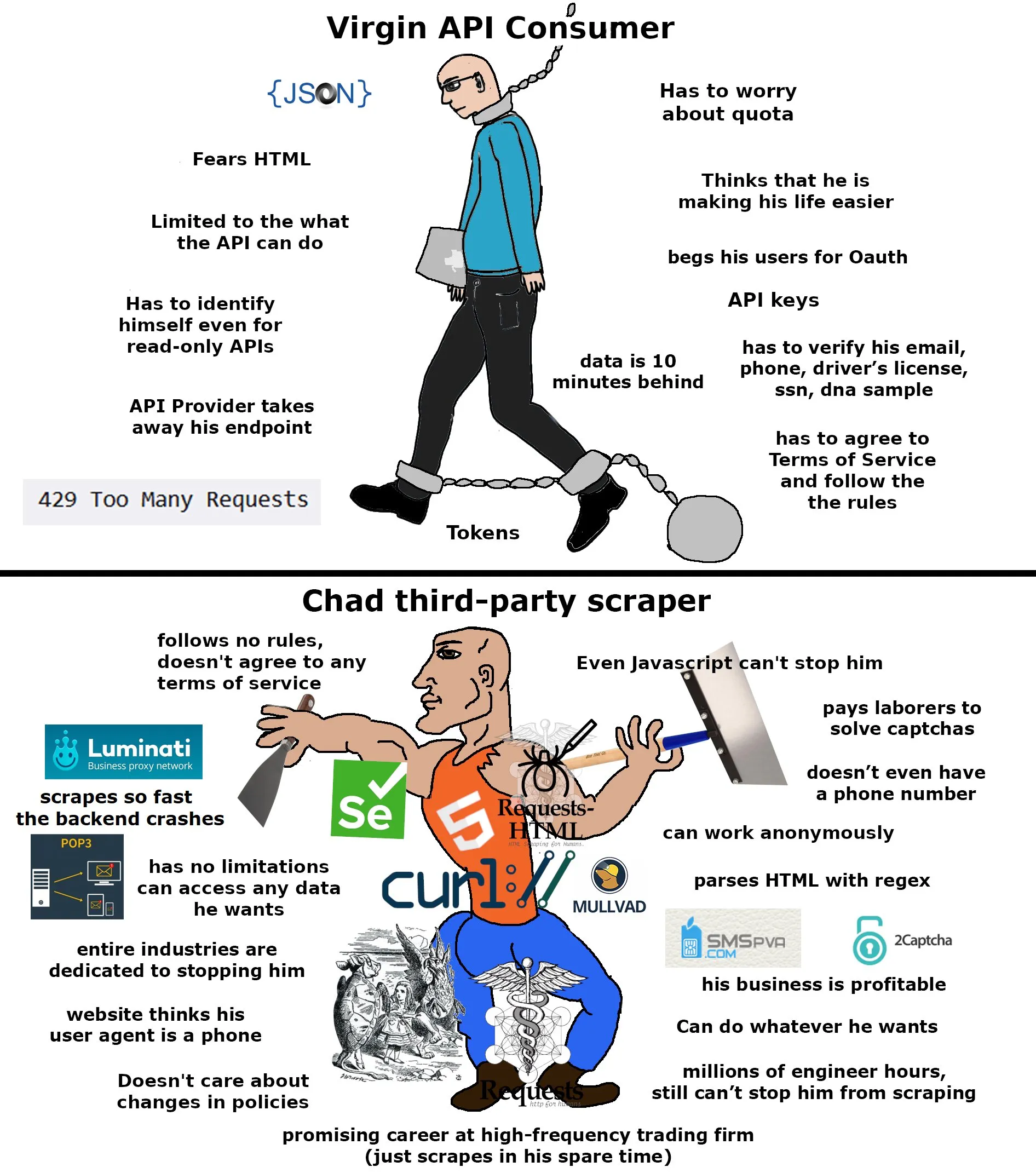
You have probably seen some version of this meme before. The joke is simple: the API consumer follows the official path and gets all the constraints. The third-party scraper builds around them with proxies, CAPTCHA solvers, SMS verification, and whatever else is needed. But there is another layer to that story. Someone still has to buy all that infrastructure, pass proxy KYC (Know Your Customer), when required, fund the accounts, and keep everything running. And sometimes, that person becomes the shortcut for someone even shadier.
As part of our threat intelligence work, we regularly look at bot projects to understand how attackers automate abuse against our customers. Some of these projects are simply exposed on the Internet without authentication. And when that happens, we often get much more than source code: proxy credentials, CAPTCHA solver keys, SMS provider tokens, email accounts, API keys, and other secrets used by the bot.
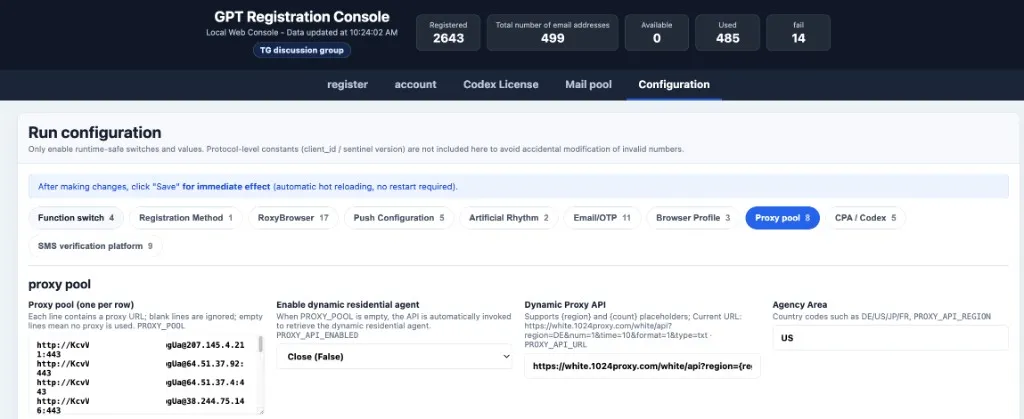
The example above comes from an unsecured GPT farm used to automate OpenAI account creation. Among other things, its configuration exposed credentials for a residential proxy provider. So, someone went through the trouble of building a bot, buying proxy access, and setting up the infrastructure required to create large numbers of fake accounts, only to leave the proxy credentials available for someone else to reuse. If you are going to create thousands of fake accounts with bots, at least secure your credentials. Otherwise, someone shadier may end up abusing you too. There is a more interesting point behind the joke. Proxy providers have been putting more controls around access to their networks, including KYC. That creates friction for fraudsters who would rather not associate their real identity with a credential stuffing campaign or 250,000 fake accounts. But fraudsters are creative, and sometimes, the easiest way around KYC is not to bypass it yourself: It is to take over an account that already passed it.
This is not just a bot dev problem
In this example, a fraudster can reuse a proxy account that another bot developer already passed KYC for. But the same pattern applies to most platforms that give more trust or privileges to verified accounts. If an account has already passed KYC, built reputation, or unlocked higher limits, compromising that account can be easier than going through the same checks from scratch.
Proxy providers are tightening access#
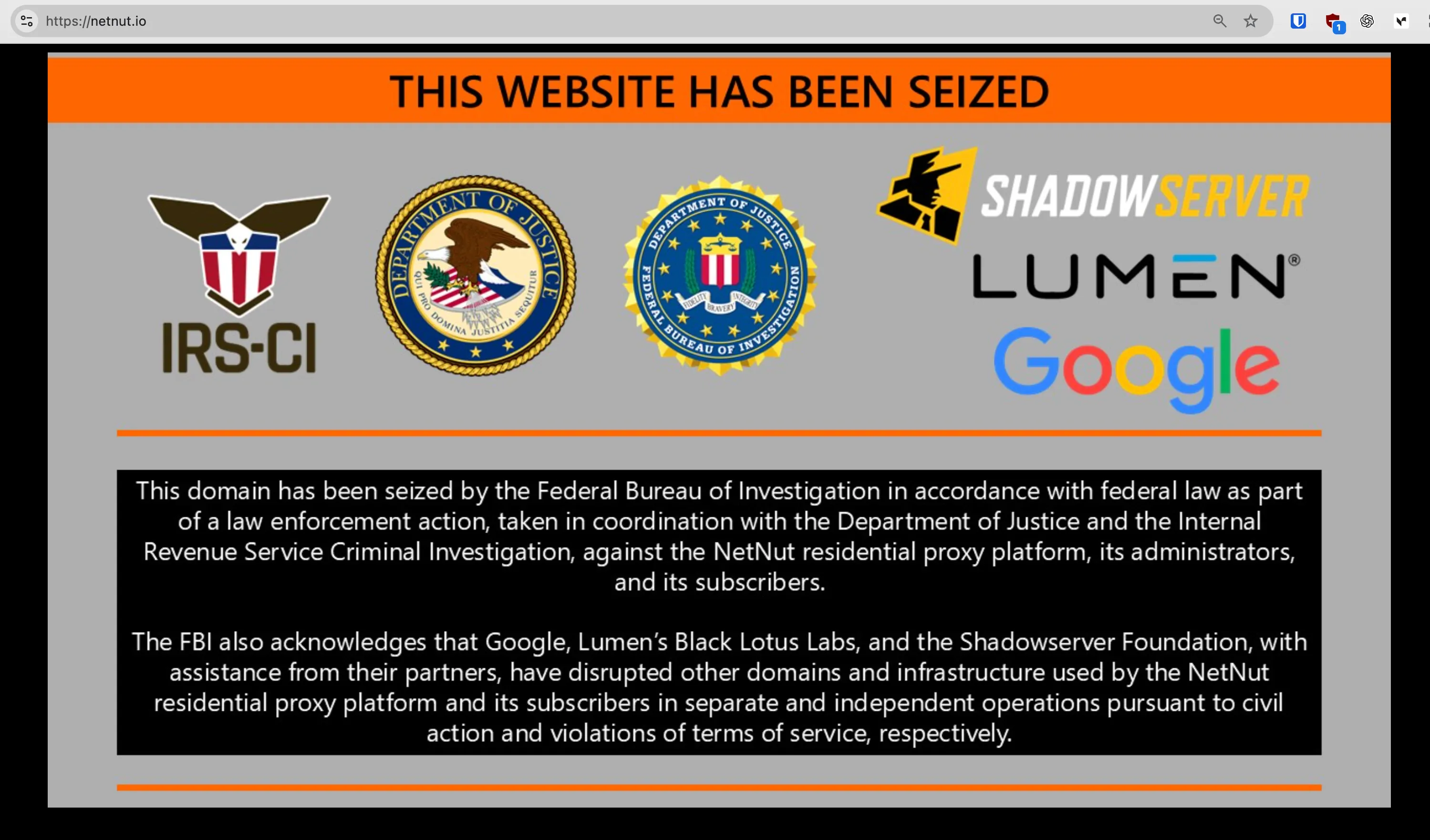
Residential proxy networks have been under more scrutiny recently. In July 2026, the FBI seized hundreds of domains associated with NetNut after researchers linked parts of its residential proxy network to the Popa botnet, which included millions of compromised devices.
This is not the first time a large residential proxy network has ended up in the spotlight. Last year, researchers tied IPIDEA and several related proxy brands to botnet activity and compromised devices. Against that background, it is not surprising to see proxy providers putting more controls around who can buy access to their networks, including KYC and use-case verification. And to be fair, this can help. If a customer tells you they want residential proxies for web scraping, that is one thing. If their use case looks like mass fake account creation or account takeover, you probably do not want to onboard them. Whether that makes a residential proxy network truly “ethical” is a separate question. KYC tells you something about the customer, not necessarily how the residential IPs were sourced. But that is not really the point here. From an abuse perspective, KYC matters because it adds friction. A legitimate scraper may be fine providing company details and explaining its use case. Someone planning to create 250,000 fake accounts may be less enthusiastic.
KYC creates friction for fraudsters#
If your use case is legitimate scraping, KYC is mostly another onboarding step. You provide company details, explain what you are doing, maybe upload an ID, and wait for approval. If your plan is to run credential stuffing, create hundreds of thousands of fake accounts, abuse referral programs, or take over user accounts, you probably do not want that activity tied to your real identity. So what do you do if you still need a large residential proxy pool? One option is obvious: find a provider with loose controls, no KYC, and crypto payments. But there is another option that is more interesting for this story: use an account that has already passed KYC. If another bot developer has already opened the proxy account, completed the verification, funded it, and left the credentials exposed, a fraudster can simply reuse that access. The control is still there. The fraudster just bypasses it by abusing someone else’s trusted account.
The bot dev food chain#
This is where the whole thing starts to look like a small bot dev food chain. One actor buys the infrastructure. They open the proxy account, pass KYC, add a payment method, configure the proxy pool, maybe pay for CAPTCHA solvers and SMS verification, and build the automation around all of it. Another actor can skip most of that work and just reuse the first actor’s credentials. The first bot developer may already be automating fake account creation or operating in a grey area. But that does not make their infrastructure any less useful to someone else. If the proxy account is already verified, funded, and working, it becomes an attractive target. That second actor can now skip onboarding and KYC, then use the same proxy access for something completely different:
- credential stuffing
- mass fake account creation
- referral abuse
- loyalty point theft
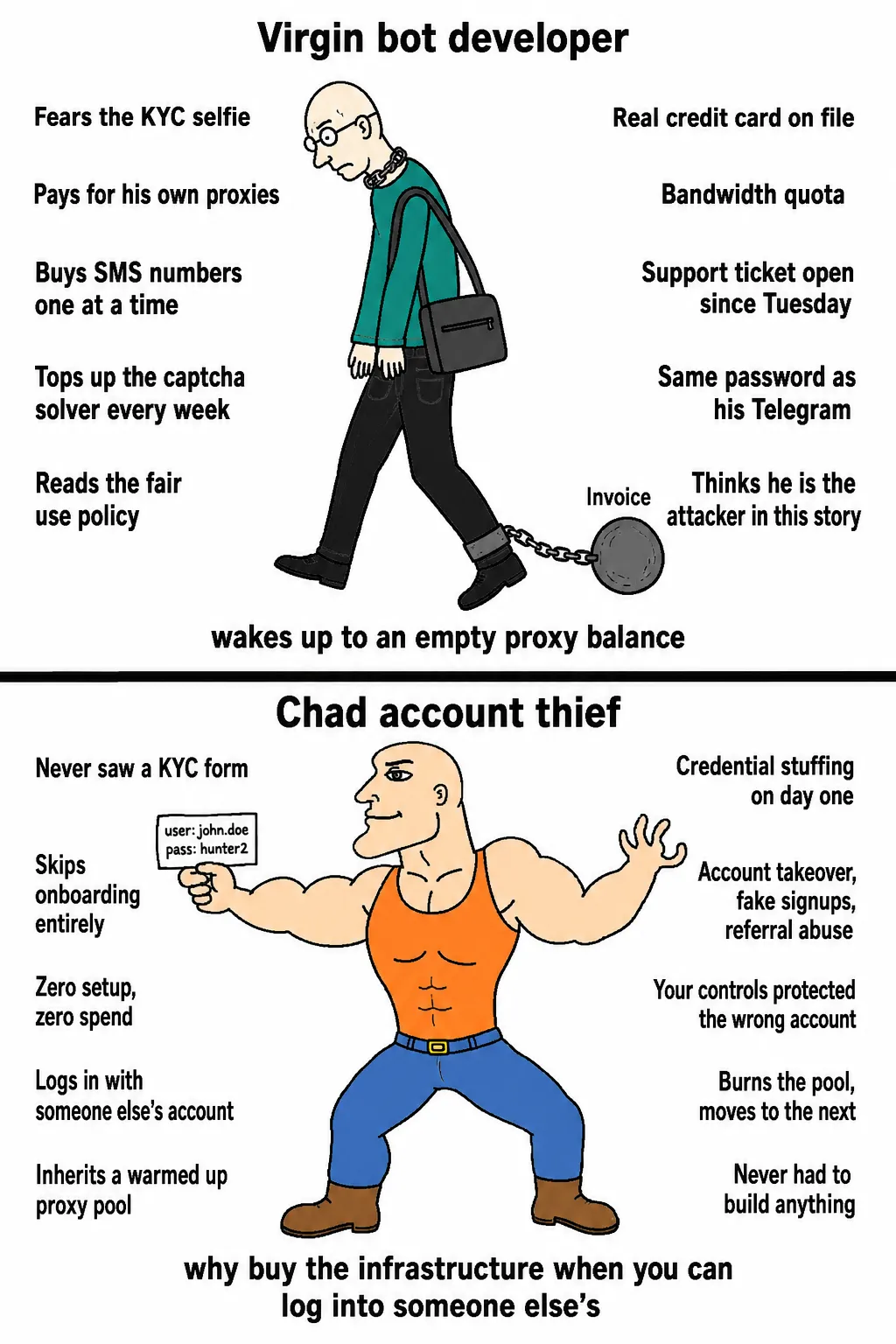
Once a trusted account is compromised, the controls that were applied during onboarding no longer matter much. Here, the account just happens to belong to another bot developer. One actor passes KYC and gets access. Another steals the credentials and inherits that access.
Bot projects leak valuable credentials#
Exposed bot projects are not rare. Some are hosted publicly without authentication, and when that happens they often expose much more than source code: proxy credentials, CAPTCHA solver keys, SMS provider tokens, email accounts, and sometimes credentials for the target platform itself. We found one unsecured GPT farm whose proxy configuration was publicly accessible.
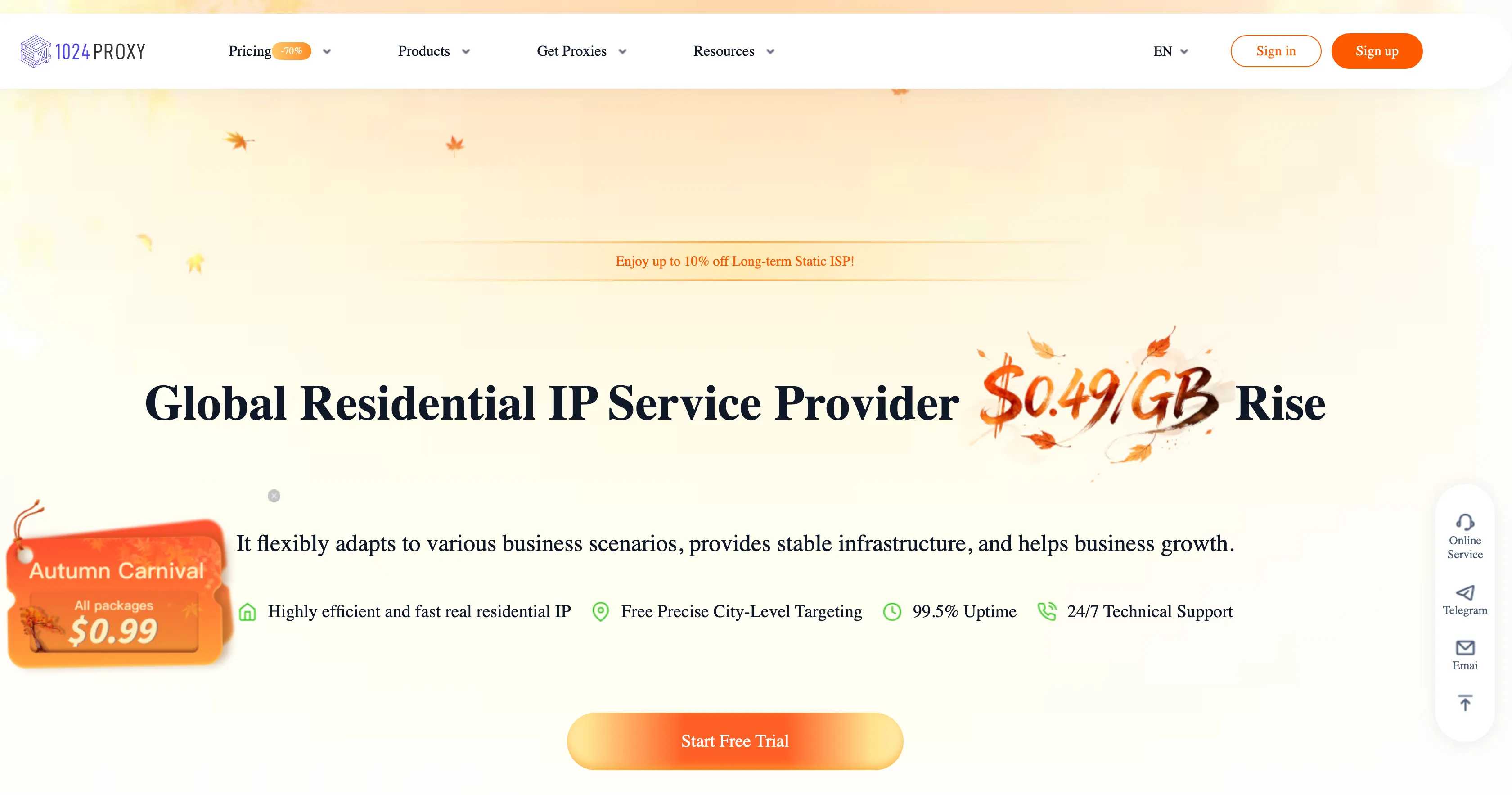
The project was using 1024 Proxy.
The important part is what those credentials represent. They may belong to an account that has already been approved, funded, configured, and tested. For a proxy provider, KYC may already be completed and the proxy pool may already be active, which makes the account useful well beyond the original bot project. A fraudster who gets those credentials can potentially skip the whole onboarding flow and reuse the existing access directly. So the value of the leak is not just the password or the remaining proxy balance, but the access and trust attached to the account, which can then be repurposed for a completely different abuse case.
Trusted accounts become targets#
KYC still matters because it makes it harder to create anonymous accounts and can filter out obviously abusive use cases. But once that friction exists, attackers have an incentive to look for accounts that already passed the checks instead of going through them themselves. For a proxy provider, that can mean stealing exposed credentials from another bot developer who already completed KYC, funded the account, and got access to the network. The same pattern applies more broadly to SaaS platforms: if verified, old, or otherwise trusted accounts get more privileges or face fewer controls, those accounts become more attractive targets for account takeover. Credential stuffing is one obvious way to get there. Instead of creating a fresh account and building trust from scratch, an attacker can compromise an account that already has it. That is the broader lesson here: stronger onboarding controls can reduce one path to abuse, but they also increase the value of trusted accounts. In the proxy example, the irony is pretty good. One bot developer passes KYC, funds the account, and uses it to create fake accounts at scale. Another fraudster steals those credentials and reuses the same trusted access for something else. There is always a bigger fraudster. If you are going to abuse a platform at scale, at least secure your credentials.